

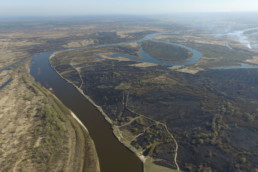
Natural hydrological regimes are key for Polesia's resilience to devastating landscape fires
New study: natural hydrological regimes are key for Polesia's resilience to devastating landscape fires
Landscape fires disproportionally affect areas of conservation priority but only under low moisture conditions - this is the conclusion of the new peer-reviewed study where scientists mapped and analyzed large fires that occurred over a 19-year period in Polesia, a region containing some of Europe’s last pristine peatlands and lowland forests in Eastern Europe.
Fires are of great concern to policymakers in the region due to the economic and health costs, and a lot of resources are used to suppress fires during hot and dry years. There are potentially natural solutions to fires, however, that could also benefit birds, biodiversity and climate issues. These ‘nature-based’ solutions include restoring drained wetlands. In this study, freely-available satellite data were used to explore the prevalence of large fires and the factors causing them. This allowed researchers to explore whether restoring the landscape’s wetlands could reduce the increasing risk of large, damaging fires as the climate changes.
This study identified five fires reaching more than 100 km2, a threshold often used to classify ‘megafires’. Frequent spring and summer fires predominantly started in agricultural areas, where farmers burn the land to clear it, both before planting and following the harvest. However, these fires often spread into neighbouring peatlands and floodplain meadows, endangering threatened wildlife, such as the Greater Spotted Eagle and Aquatic Warbler, and damaging a globally important carbon sink.
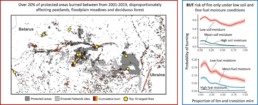
The largest fires burned in native deciduous forests, threatening protected old-growth oak and beech forests, which are more vulnerable and less likely to recover than more fire-adapted trees. Overall, more than one fifth of protected land burned. This is compared with 8% of unprotected land. One fire reached 97 km2 and burned significant areas of the Chernobyl Exclusion Zone, where radioactive contamination from the Chernobyl 1986 disaster is highest, and where the impacts of large fires on human health may be particularly severe.
The results of the study suggest that landscape restoration in Polesia’s wetlands would help to limit the spread and intensity of unnaturally large, damaging fires, while reinstating natural, periodic low-intensity fires, providing ecosystem benefits and supporting long-term carbon storage.
Throughout Europe, including in Polesia, years of drainage for agriculture and commercial forestry has created overgrown, drier landscapes that are more susceptible to fires. This study showed that open peatlands, meadows, and deciduous forests were far more likely to burn when moisture conditions in the soil and litter were low. In contrast, peatlands were very unlikely to burn under high moisture conditions. Preserving and restoring large, intact, well-hydrated peatlands would help to create natural barriers to large, severe fires, while reinstating periodic low-intensity fires. Doing so would provide ecosystem and conservation benefits, support long-term carbon storage and help tackle climate change, and protect human lives.
The article was originally published on www.bto.org.



The project “Polesia – Wilderness Without Borders” is part of the Endangered Landscapes & Seascapes Programme and is funded by Arcadia. The project is coordinated by Frankfurt Zoological Society (FZS).


War beneath their wings: Greater Spotted Eagles are flying back to Polesia
War beneath their wings: Greater Spotted Eagles are flying back to Polesia
The spring migration of Greater Spotted Eagles has begun. Twenty percent of the European population of these birds breed in Polesia. Thanks to satellite tagging, we are able to keep a close eye on their movement. Now, researchers have special concerns about the migration of these endangered eagles: the birds’ path crosses Ukraine where the military conflict continues. While the war rages on the ground, the eagles fly their route undeterred.
Greater Spotted Eagles are returning to their nests in Polesia from the Balkan Peninsula, Israel, South Sudan, Zambia, and even South Africa. Every year, they fly thousands of kilometers to reach their breeding and wintering sites. Their journey is full of the expected difficulties and threats. However, they face another trial: the war is now right on their migration route. Polesia’s Greater Spotted Eagles faced this for the first time last spring. Ornithologist Valery Dombrovski, who has been researching Greater Spotted Eagles for decades and keeps a close eye on the GPS-tagged birds, shared some of his observations with us…
“Spring migration in 2022 was quite typical in terms of dates and average duration. But our close attention was riveted to Greater Spotted Eagles nesting in the Chornobyl Exclusion Zone – they had to cross the Kyiv region where active hostilities were going on. One of them, a male by the name of Borovets, was the first to start on his way. He followed his traditional route through Odessa and Cherkasy regions. Borovets approached Kyiv on the 29th of March, at the very moment when the Russian troops withdrew under attack by the Ukrainian forces. Borovets stopped on the left bank of the Dnieper River to wait out bad weather: the sky was cloudy, and cold rain had started. The eagle spent the following day at the same place. Sounds of explosions were heard from far away – Kyiv was still being shelled. Could the bird tell these sounds from spring thunder? It is not really possible. On the 31st of March, when the sun shone again, Borovets rushed further north.
He flew above the eastern outskirts of Kyiv and then along the Kyiv Water Reservoir. With his sharp vision, it is likely he could observe long columns of military vehicles retreating from Kyiv, probably an uninteresting sight for the bird. Foul weather forced Borovets to stop again, now further up the reservoir, and about 20 kilometers from the Belarusian border. This time, he stayed in one place longer – from the 31st of March until the 3rd of April. It was quiet: explosions were no longer audible. The Russian troops had retreated from the Kyiv Region and the Chornobyl Exclusion Zone. Borovets fed happily on birds and mammals hiding in riverside reeds, and visited the farmlands around the neighboring villages.
On the 4th of April, a fair wind blew from the south and drew the clouds away. Just 4 hours later, the eagle reached his nest in the Polesie State Radioecological Reserve. Fortunately, the helicopters that were flying back and forth above the reserve every day during the past month had already followed the rest of Russian military units. Thankfully, Borovets could occupy himself with his “family” concerns. During the remainder of the 2022 season, he successfully bred a chick.
A female eagle, named Elleni, arrived in Ukraine much later. On the 4th of April, she stopped shortly in the Odessa Region. By the end of the next day, thanks to favorable weather, Elleni reached the western outskirts of Kyiv. There, she stayed overnight alongside the Irpin river. The fighting had stopped there several days earlier. The bird showed no unusual behavior. On the morning of April 6, she flew further north. Her flight path crossed now infamous places: Irpin, Gostomel, and Bucha where terrible massacres took place. Luckily, birds cannot understand such horrors. The next day, Elleni reached her nest, nearby to the nest of Borovets. Elleni’s breeding season ended with its own sadness, as her chick died in the middle of summer from an unknown cause.
In spring 2022, other Greater Spotted Eagles from Polesia flew across the Western part of Ukraine where there were no active battles. All the birds reached their nests successfully. The fastest one was Blond, on the 17th of March, he was already in his nest in Almany Mires. Most birds arrived later, in the first week of April. Vialuta was the last to return, arriving home on the 20th of April. By the way, this is the latest date of the end of spring migration for five years of observations.”
The war in Ukraine gave ornithologists not only food for thought, but also material for scientific research. We expect a research paper to be published analyzing the war’s impact upon the migration patterns of the Greater Spotted Eagles. In the meanwhile, though we can’t stop the war immediately, we hope for a safe migration back home for the birds – wild Polesia is waiting for them.
Top image fatures a Greater Spotted Eagle in flight. Photo credit: Daniel Rosengren.
The project “Polesia – Wilderness Without Borders” is part of the Endangered Landscapes & Seascapes Programme and is funded by Arcadia. The project is coordinated by Frankfurt Zoological Society (FZS).
Decades without man: rewilding of the Chornobyl Exclusion Zone benefits endangered birds
Decades without man: rewilding of the Chornobyl Exclusion Zone benefits endangered birds
A new study shows the benefits of restoration in countering biodiversity loss. The paper, published in January 2022 by scientists from Belarus and Great Britain, used long-term raptor monitoring data from the Chornobyl Exclusion Zone. Data for the study was collected over 22 years, in parallel to passive rewilding of the abandoned area.
The accident at the Chornobyl Nuclear Power Plant in 1986 was one of the worst nuclear disasters that ever happened. When speaking about the long-term consequences, people naturally tend to refer to the negative impact on human health and on the environment, caused by the heavy radioactive contamination. However, there is at least one additional long-run side effect of this tragic occurrence that is often overlooked: the accident paved the way for an unparalleled case of large-scale rewilding of a settled region. On about 470,000 hectares of land that had formerly been densely populated and used for intensive agriculture, human activities ceased almost completely from one moment to the next. The people who once called this region home had to move away, the farmland was abandoned, and drainage canals were locked to prevent the spreading of wildfires and contaminated water. But the retreat of the population did not mean that all life had left the area. Nature took its chance and began to reclaim the territory, at its own will and pace.
This rewilding process has been observed by researchers for more than two decades. The findings are impressive: From 1999 to 2017, the wetland area increased by 680% and forest area by 14%. Now, more than 30 years after the accident, the territory looks like Polesian wetland habitats in northern Ukraine or southern Belarus, with typical seasonal floods and large mires.
Wilderness is advancing: who wins and who loses out?
The transformation of the animal communities was expected to be enormous after the massive decrease of human impact. Over a period of 22 years – from 1998 to 2019 – ornithologist Valery Dombrovski monitored population sizes, species composition, and habitat changes of birds of prey nesting in the Chornobyl Exclusion Zone. Parts of this study were supported by the Polesia – Wilderness without Borders project. The study area spans over 14,700 hectares of former farmland that had been intensively used until 1986.
During the study period 13 breeding species of daytime predators were recorded, and both species composition as well as the number of individuals changed significantly.
For instance, the globally endangered Greater Spotted Eagle (Clanga clanga), which relies on wetland habitats to hunt and is very sensitive to human disturbance, had been locally extinct in the area at the time of the nuclear catastrophe. 33 years later, in 2019, four pairs were recorded at the study site, and at least 13 pairs were known to be nesting in the whole Belarusian part of the Chornobyl Exclusion Zone. Today, this region is the only part of the world where the population of this rare species is growing. The increase of wetland areas alongside low levels of anthropogenic influence in the Chornobyl area created favorable living conditions for the Greater Spotted Eagle, which may help save this threatened species from extinction.
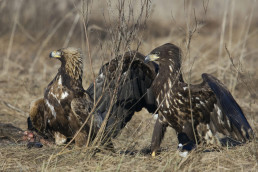
Another (locally) endangered raptor that reacts sensitively to human presence is the White-tailed Eagle (Haliaeetus albicilla). Before the nuclear accident, this bird could not be found in what is today the Chornobyl Exclusion Zone. Only in 1992, White-tailed Eagles were first sighted here, and by 2010 their number had increased to 20 pairs. Unlike the Greater Spotted Eagles, White-tailed Eagles are non-migratory, so the availability of prey in winter is crucial for their survival. And here is how the true value of rewilding reveals itself: a functioning ecological community has returned to the area, composed of various species that sustain and support each other. Along with the birds of prey, top predators like wolves as well as their prey species (such as deer and moose) established viable populations, so that there is enough carrion for the White-tailed Eagle to make it through the cold season.
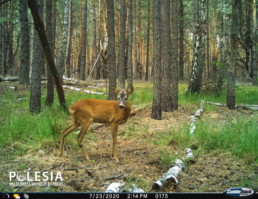
While the Greater Spotted Eagle and the White-tailed Eagle profited from the abandonment of the area, the scientists also observed decreasing populations of certain bird species. This applies to raptors that prefer hunting in farmland, such as Montagu’s Harrier (Circus pygargus), Lesser Spotted Eagle (Clanga pomarina), Honey Buzzard (Pernis apivorus), and Common Buzzard (Buteo buteo). Interestingly, at the beginning of the monitoring work in 1998, the population sizes of these species in the Chornobyl Exclusion Zone were much higher than the regional average.
Overall, the study shows that the passive rewilding of ecosystems is a complex and lengthy process. Some species needed nearly two decades to build stable populations, and others, like the Greater and Lesser Spotted Eagle, are still adapting. The Greater Spotted Eagle started colonizing the Chornobyl Exclusion Zone only 15 years after humans had left. Therefore, a long-term dynamic monitoring is the only way to assess the restoration process and the development of species composition and population sizes. But it has already become obvious that passive rewilding can bring European lowlands back to a near-natural state – both on the ecosystem as well as on the biodiversity levels.
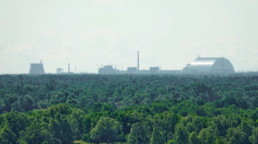
Top image shows the view of a reactor of the Chornobyl nuclear power plant from a fire watchtower. Polesia, Ukraine. Photo credit: Elleni Vendras.
The project “Polesia – Wilderness Without Borders” is part of the Endangered Landscapes & Seascapes Programme and is funded by Arcadia. The project is coordinated by Frankfurt Zoological Society (FZS).
New partnership for the benefit of Polesia’s wetlands
New partnership for the benefit of Polesia’s wetlands
Our plans for wetland restoration in Ukraine are now supported by the Michael Succow Foundation. Through this new partnership, our colleagues are working on a feasibility assessment on prospective rewetting of drained peatlands in the Ukrainian part of Polesia.
Ecosystem-based approach: human-centered, nature-friendly
Founded in 1997, the Succow Foundation is engaged in projects of nature conservation, climate change mitigation, protected area management and sustainable land use on four continents covering a variety of landscapes. The organisation possesses extensive experience working in post-Soviet countries, including Ukraine.
Recently, the Succow Foundation team implemented a three-and-a-half-year-long project “Ecosystem-based Adaptation to Climate Change and Sustainable Regional Development by Empowerment of Ukrainian Biosphere Reserves”. The ecosystem-based approach leans upon protection, sustainable management and restoration of ecosystems in order to preserve or recover their natural properties. In turn, fully functional and sustainable ecosystems provide people with vital ecosystem services.
The benefits of ecosystem approach were demonstrated in practice in three pilot areas located in Ukrainian protected areas. Each of them boast clear and measurable outcomes. For example, due to rewetting of a drained swamp area in Roztochya Nature Reserve, wildfires don’t occur there anymore, the ground surface temperature has dropped.
The scientific knowledge and field experience of the Succow Foundation staff were summarized in lists of proposed protective measures and activities for different types of ecosystems, including wetlands. They can be used as guides in the prospective restoration projects in Polesia.
Rethinking the value of “healthy” wetlands
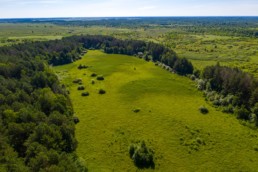
Wetland restoration is moving higher up on the agenda in Ukraine for a number of reasons. Wetlands of the Polesia were intensively drained mainly for agriculture production between 50th and 80th of the 20th century, which have changed the hydrological regime of the entire territory. It has led to degradation and thus in many cases abandonment of the lands, drop in groundwater levels, wildfires and droughts. Drained and degraded peatlands are sources of greenhouse gases. Particles emitted during wildfires are a dangerous air pollutant and got Kyiv to the top of the cities with the highest atmospheric pollution in 2020 and 2021.
At the same time, in their natural state wetlands mitigate the impacts of climate change due to their ability to absorb and retain carbon. When functioning properly, they protect people from extreme weather events by regulating the water flow. Wetlands serve as “kidneys of the landscape” accumulating and purifying water. The importance of Polesia’s water resources for Ukraine is immense.
Olga Denyshchyk, scientific project coordinator at the Succow Foundation
“Polesia is unique and fragile. Beyond its beauty, biodiversity, cultural and historical values, it holds the strategic water resources for the Dnieper, thus for the 2/3 of the Ukrainians who drink that water. I feel privileged to work in conservation and restoration of ecosystems. That is the best job I can imagine.”

The Russian invasion of Ukraine in the past year made Ukrainians recall another important role of wetlands, proven many times before in the course of history: barely passable, undisturbed mires and bogs serve as natural barriers against military invasion. Thus, restoration of drained wetlands in Polesia, in the vicinity to the northern border of Ukraine, would strengthen the natural defense line. Besides, natural hydrological regime of wetlands minimizes the risk of fires caused by shelling or explosions.
Turning wishes into plans
Now, when restoration of wetlands in Ukraine is likely to be supported by stakeholders, Frankfurt Zoological Society and the Michael Succow Foundation join their knowledge and experience to push this important work forward. The foundation’s experts are currently working on feasibility assessments for potential restoration sites in the Ukrainian part of Polesia, including Ramsar sites.
Anatoliy Smaliychuk, PhD in geography, GIS expert
“In my opinion, mire and old-growth forest ecosystems should be preserved and restored in Polesia foremost. Drainage and wood felling are the hurts that hardly could be cured completely. But we need to try, otherwise the natural landscapes we can observe now will be lost forever. Since the local culture and customs are closely interwoven with nature, they are under the risk of degradation as well.”
The complex assessment is expected to cover many aspects – from spatial, ecological and hydrological characteristics to legal status of territories and stakeholder analysis. This will allow the experts to determine the territories with the best prospects for successful restoration projects, plan practical restoration measures for each area and thus make our joint efforts for the benefit of Polesia’s wetlands as impactful and efficient as possible.
Top image shows a wetland in the Pripyat-Stokhid National Park in Polesia, Ukraine. Photo credit: Daniel Rosengren
The project “Polesia – Wilderness Without Borders” is part of the Endangered Landscapes & Seascapes Programme and is funded by Arcadia. The project is coordinated by Frankfurt Zoological Society (FZS).
The year 2022: conservation wins in a year of trials
The year 2022: conservation wins in a year of trials
The year 2022 was a time of bitter trials for Polesia. Once known as a territory of precious nature, it turned into a battleground during Russia’s invasion of Ukraine. As a result of the war in Ukraine, we had to revise our project since many activities became impossible in the current situation. And still, our numerous efforts undertaken in previous years bore fruit in 2022. In spite of the dramatic developments of the past year, some conservation results worth celebrating were still achieved.
Protected areas: greater size, stronger connectivity
36,000 hectares – this is the total area that gained legal protection through the creation of a new national park and a nature reserve as well as issuing protection passports for rare species’ habitat.
The year 2022 started with invigorating news: A decree issued by the President of Ukraine marked the official creation of the new Pushcha Radzivila National Park. The park protects a high conservation value area holding old-growth spruce forests, bogs and mires. Pushcha Radzivila, covering 24,265 ha , is home to more than 450 species of flora and 230 of fauna – dozens of which are nationally endangered. Among the national park’s inhabitants are Grey Cranes, Black Grouse, beavers, moose, lynx and various species of bats.
Bordering Rivnenskyi Strict Nature Reserve and Almany Mires Reserve, Pushcha Radzivila became an important link in the network of protected areas of Polesia. Through the designation of the new national park, the protection and ecological connectivity of the largest natural complex of bogs and transitional mires in Europe was enhanced.
Based upon field research conducted as part of the Wild Polesia project in 2020-2021, 142 habitat sites of rare species in Polesia were placed under legal protection. Their total area amounts to 6,372 ha. Forty two species now enjoy better protection, including mammals, birds, reptiles, insects, plants and fungi. Locating and mapping the space that species need to survive and securing this habitat through the “protection passports” plays a crucial role in bringing rare species protection into effect. This procedure envisages elaboration of scientifically grounded conservation measures for each single species (and sometimes even for certain habitat sites). These measures are mandatory, and their implementation is controlled.
Meanwhile, in February, 2022, the Almany Mires Nature Reserve got a new management plan for the coming 20 years. This was preceded by months of painstaking work that resulted in the list of scientifically grounded measures on conservation and support of valuable ecosystems, and of populations of endangered species of flora and fauna, as well as ensuring sustainable functioning of the nature reserve. It is expected that these measures will mitigate or eliminate the most significant threats to the ecosystems of the Almany Mires, such as climate change, drainage reclamation, wildfires, illegal wood felling, drying up of trees, road infrastructure development, spread of invasive species of flora and fauna.
Science for Polesia: long-term monitoring in the spotlight
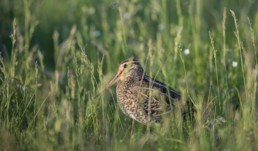
The natural landscape of Polesia is shaped by the Pripyat – one of the few major European rivers that are still free-flowing. Advocates for Polesia’s wilderness focus on the need to maintain the natural state of the Pripyat as a key factor for the preservation of ecosystems and biodiversity in the whole region. This message was again reinforced by a study co-authored by Pavel Pinchuk from the project published in January 2022. Summing up the results of long-term monitoring carried out from 2001 to 2020, it proves that the natural hydrological regime of rivers is extremely important for Great Snipes during their breeding season.
Competing for a mate is extremely energy-demanding for lekking male Great Snipes. Therefore, rich feeding sites in close proximity to their breeding territories are essential for maintaining good physical conditions. Up to 90% of Great Snipes’ diet is made up of earthworms whose availability depends on the water level. Low water levels allows earthworms to disperse in a deep layer of soil. While, as the water table rises, they must congregate in a narrow layer of soil close to the surface. In this case, Great Snipes have easily available prey in abundance and their physical condition improves. At the same time, a further rise of water levels associated with flooding of the Great Snipes’ feeding territories leads to a decrease of the body condition of lekking birds. This is because the earthworms leave the flooded sites; their relatively short legs also don’t allow Great Snipes to wade in deep water. Thus, the birds have to expend much more energy, flying more often and further in search of prey.
The authors of the research highlight that the natural hydrological regime of the Pripyat with seasonal water level fluctuations is important for the preservation of lowland leks of the Great Snipe and, probably, of other species of waders breeding in the floodplains of Polesia’s rivers.
Another paper published in early 2022 looks into the unique case of wilderness restoration in the Chernobyl Exclusion Zone. The Chernobyl nuclear disaster (1986) was one of the worst man-made catastrophes in history. As a result of this tragic occurrence, in vast territories – previously densely populated and intensively used for agriculture – human activity ceased almost completely. The people who lived here up to 1986 had to relocate, the farmland was abandoned, and drainage canals were locked to prevent the spread of wildfires and contaminated water. As a result, a unique case of unguided nature restoration developed.
The long-term dynamic monitoring of landcover conducted in the Chernobyl Exclusion Zone from 1999 to 2017 shows an impressive increase in wetland and forest areas. In parallel to this, species’ composition and population numbers changed too. The monitoring of diurnal birds of prey carried out from 1998 to 2019 proved that the Greater Spotted Eagle and the White-tailed Eagle – both wetland specialists sensitive to human disturbance that had been locally extinct in the study area – returned, and their numbers increased. At the same time, the scientists observed decreasing populations of birds of prey that prefer hunting in farmland. Interestingly, at the beginning of the monitoring, the population sizes of these species in the Chernobyl Exclusion Zone were much higher than the regional average.
The study’s authors concluded that passive rewilding can bring European lowlands back to a near-natural state – at both an ecosystem and a biodiversity level.
Mapping the Polesia landscape
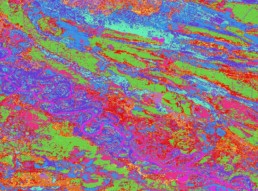
Another achievement by our scientists in 2022 is the elaboration of the first bespoke landcover map of the whole of Polesia. This became possible due to the meticulous work on bringing the results of large-scale field surveys into correlation with the data provided by a pair of Sentinel satellites. Google Earth Engine is used for information processing. The map identifies a set of landcover classes that can be detected from the satellite’s orbit, like farmlands and urban territories, water, deciduous and coniferous forests, meadows, bogs and mires. The tool allows experts to carry out various environmental analyses. For instance, the map enables dynamic monitoring of restoration or degradation of natural areas, changes in land use, and analyzing the intensity of seasonal floods in Polesia. The tool can also be of use for assessing landscape connectivity, mapping species distribution, or protected areas enlargement.
We hope that the year 2023 will be more favorable for one of largest and most valuable natural landscapes of Europe and its people. And we enter the new year eager to keep on working for the benefit of Polesia’s wilderness and the communities that call this impressive landscape home.
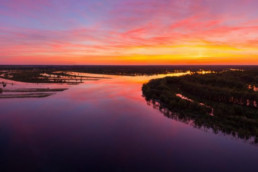
Top image shows the Pripyat river floodplain at sunset. Photo credit: Viktar Malyshchyc.
The project “Polesia – Wilderness Without Borders” is part of the Endangered Landscapes & Seascapes Programme and is funded by Arcadia. The project is coordinated by Frankfurt Zoological Society (FZS).
Where the rare things are
Where the rare things are:
mapping habitat and improving protection of rare species in Polesia bear fruit
Good news for the wildlife of Polesia! Over the past year, 142 habitats of rare species in the Lelchycy and Stolin Districts of Belarus were put under legal protection. Their total area amounts to 6 372 hectares. Thanks to our project, 42 rare species now enjoy better protection, including mammals, birds, reptiles, insects, plants and fungi. Among them are the Greater Spotted Eagle and the Azure Tit, the Weasel and the Hazel Dormouse, the Pond Turtle and the Great Raft Spider, the Oblong-leaved Sundew and the Maitake mushroom.
Rare species of animals, plants and fungi that are endangered and subject to protection are listed in the “Red Book of Belarus”. But in order to bring their protection into effect, all individual habitats of these species must first be identified and registered. This is a complex procedure and requires the participation of a number of specialists and institutions. The identification of habitats usually happens within the frame of scientific field surveys, forest management or environmental protection actions. Sometimes also lay persons detect and report habitats, however, only qualified specialists can document them for the official registration process.
The next step is the preparation of a “habitat passport”. The passport needs to contain the name of the species, photos, description and coordinates of the location, the number of individuals, and an assessment of the overall state of the population.
Along with the passport, conservation obligations are issued. They list the necessary conservation measures and determine who is responsible for their implementation. Usually, it falls to the land user. This may be a legal entity (such as forestry), a sole proprietor or even a private person.
Passports and conservation obligations are sent to the local Inspection of Natural Resources and Environmental Protection, and then to the National Academy of Sciences for verification and approval. The agreed documents become the basis for the decision of local authorities on placing the habitats of rare species under protection. Now, conservation measures are legally justified! Their implementation is monitored by the Ministry of Natural Resources and Environmental Protection and its local offices.
What exactly needs to (or mustn’t) be done to save a rare species?
Obviously, protective measures are not the same for plants and fish, insects and fungi, reptiles and birds.
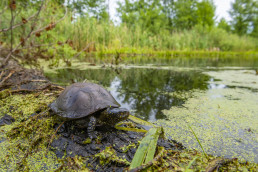
The survival of the European pond turtle (Emys оrbicularis) directly depends on the preservation of swamps and river floodplains. Where pond turtle habitats are registered, drainage for land reclamation is prohibited. Groundwork is not allowed either in order to protect eggs and young turtles. Strict regulations also apply to the management of water bodies: they mustn’t be artificially deepened and straightened, and aquatic plants may not be extracted or destroyed.
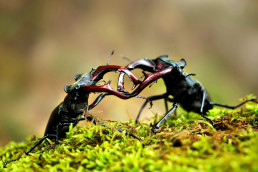
Larvae of a stag beetle (Lucanus cervus) need several years to develop during which they live on dead trees and feed on rotten wood. This is why the felling of old broad-leaved forests – especially oak-woods – the removal of dead trees and windbreak pose significant threats to this rare insect species. Cutting down old and withered trees, deploying chemicals or burning dry vegetation and logging waste are therefore forbidden in areas adjacent to stag beetle habitats.
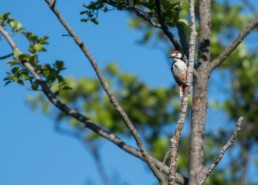
Another “Red Book” species is the white-backed woodpecker (Dendrocopos leutocos). These rare birds build their homes in rotten trees and feed on insects they find under the withered bark. Therefore, not a single tree may be felled in territories where the white-backed woodpecker is found. To avoid disturbance during the nesting season, hunting and logging are prohibited near white-backed woodpecker habitats from March 1 to July 1.
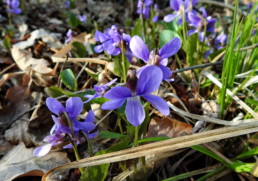
The swamp violet (Viola uliginosa) can still be found in large parts of Europe, however, numbers are declining throughout its range. Swampy terrain and seasonally flooded floodplains are optimal for this plant, so it is not surprising that in Belarus it is most often registered in the region of Polesia. In or close to swamp violet habitats drainage for land reclamation, the usage of caterpillar vehicles or any other activities that can damage or destroy the live ground cover are prohibited. Wood cutting can be carried out to a limited extent, but only if there is a stable snow cover.
We keep on searching, registering and reporting habitats of rare species of flora and fauna in Polesia to ensure their effective protection.
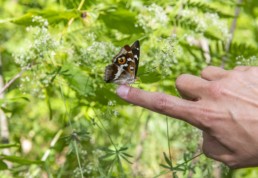
The top photo shows a Purple Emperor butterfly. Photo credit: Daniel Rosengren.
The project “Polesia – Wilderness Without Borders” is part of the Endangered Landscapes & Seascapes Programme and is funded by Arcadia. The project is coordinated by Frankfurt Zoological Society (FZS).