
Rivnenskyi Strict Nature Reserve
The area consists of five Ramsar sites: Perebrody Peatlands, Syra Pohonia Bog, Somyne Swamps, Bile Lake and Koza Berezyna Mire. Four of these represent fragments of one of Europe’s largest transboundary forest and mire complexes, the Almany/Olmany Mires. The fifth, westernmost site is a fragment of a large forest and mire complex located in the interfluve of the Stokhid and the Horyn rivers.
The landscape is dominated by forests and bogs. The Lyublinka and the Berezina Rivers with numerous tributaries flow through the reserve. There are many lakes of wetland and karst origin in its territory. Surrounded by forests and bogs, they form a single hydrological unit.
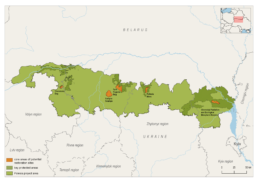
Country: Ukraine
Area: 42,291.5 ha
National protection status: Strict Nature Reserve
International protection status: Ramsar site (UA 2274) - Syra Pogonia Bog (12,718.00 ha); Ramsar site (UA 1402) - Perebrody Peatlands (10,852.00 ha); Ramsar site (UA 2275) -Somyne Swamps (9,926 ha); Ramsar site (UA 2281) - Byle Lake and Koza Berezyna Mire (8,036.50 ha); IBA (UA008) - Syra Pogonya mire (12,718 ha); Emerald Network UA0000023 - Rivnenskyi Nature Reserve (42,924 ha).
5 Ramsar sites
are situated within one protected area
20 key habitats
included in Resolution #4 of the Standing Committee to the Bern Convention area found here
1830 species
of fauna are recorded in the nature reserve
Land cover
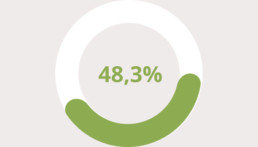
Forests
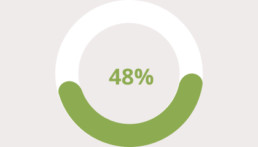
Mires
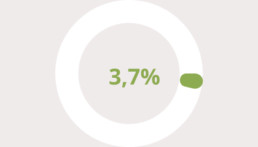
Others
Biodiversity and natural values

Habitats
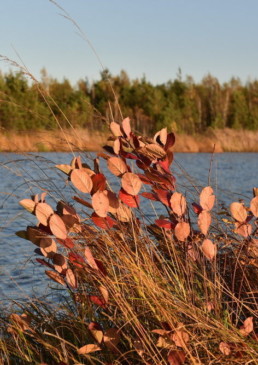
The area is peculiar for the diversity and richness of biotopes of waterbodies, mires and forests. Over 20 natural habitats requiring specific protection under the Resolution No 4 of the Standing Committee to the Bern Convention have been identified here, with the reserve being highly important for conservation of more than a half of them, including the following:
Aquatic Habitats
-
Permanent oligotrophic lakes, ponds and pools (3140), Submerged carpets of stoneworts in mesotrophic waterbodies (3140);
Wetland Habitats
-
Transition mires and quaking bogs (7140),
-
Raised bog complexes (7110);
Woodland Habitats
-
Sphagnum birch woods (91D0), Nemoral bog conifer woodland (91D0),
-
Acidophilous oak-dominated woodland (9190).


Biodiversity
575 species of higher plants occur in the reserve, including 563 species of vascular plants and 12 species of mosses.
The fauna of the reserve comprises 1830 species of animals, including 1639 species of invertebrates and 191 species of vertebrates. The territory is of great importance for a number of flora and fauna species. Over 60 species are included into Resolution No 6 of the Standing Committee to the Bern Convention, 51 floral species and 73 faunal species are listed in the Red Data Book of Ukraine.
Common for the area are the Lynx (Lynx lynx), the Otter (Lutra lutra), the Wolf (Canis lupus). Rare species registered here include the Barbastela (Barbastella barbastellus), the European Mink (Mustela lutreola) as well as insects: the Cucujus cinnaberinus, Boros schneideri, the Great Capricorn Beetle (Cerambyx cerdo), the Danube Clouded Yellow (Colias myrmidone), the Scarce Fitillary (Hypodryas maturna), etc.
Birds
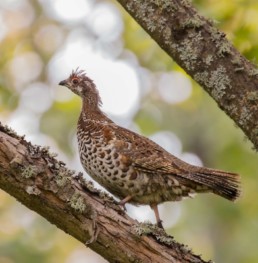
The area is of great importance for nesting of the globally threatened bird species: the Aquatic Warbler (Acrocephalus paludicola), the Great Snipe (Gallinago media), the Greater Spotted Eagle (Aquila clanga). In addition, the area is an important habitat for the Hazel Grouse (Bonasa bonasia),the Short-toed Eagle (Circaetus gallicus), the Montagu’s Harrier (Circus pygargus),the European Roller (Coracias garrulous), the White-backed Woodpecker (Dendrocopos leucotos), the Hen Harrier (Circus cyaneus), the Black Woodpecker (Dryocopus martius), the Collared Flycatcher (Ficedula albicollis), the Crane (Grus grus),the Little Bittern (Ixobrychus minutus), the Woodlark (Lullula arborea), the Three-toed Woodpecker (Picoides tridactylus), the Gray-headed Woodpecker (Picus canus), the Little crake (Porzana parva), the Spotted Crake (Porzana porzana), the Capercaillie (Tetrao urogallus).
The most important impacts and threats

Construction of drainage systems

Illegal amber mining

Wildfires
Protection and conservation needs
The entire area is protected as a strict nature reserve, with a total ban on economic activity. However, most of the boundaries of the reserve have been drawn without taking into account the natural contours of the mires. The following measures are recommended to make the conservation efforts more efficient:
- Adjust the boundaries according to the natural contours of the mires;
- Compile a detailed inventory of conservation values;
- Launch systematic monitoring of conservation values;
- Develop a management or conservation plan.
Our activities in the area
Habitat restoration
Building on the wetland restoration approach applied across the Polissia region, the Frankfurt Zoological Society (FZS) is supporting large-scale restoration planning in the Rivnenskyi Strict Nature Reserve. The work focuses on three priority wetland complexes of exceptional ecological value: Syra Pohonia Bog, Somyne Swamps, and Bile Lake, all of which are designated Ramsar sites.
Current efforts are concentrated on the preparatory phase of restoration. This includes the development of detailed engineering designs, hydrological assessments, and the completion of environmental impact assessment (EIA) procedures required for implementation. These steps are essential to ensure that restoration measures are scientifically sound, legally compliant, and effective in improving water regimes, reducing fire risk, and enhancing habitat conditions. Subject to the successful completion of all planning and permitting processes, on-the-ground restoration works are foreseen to begin in 2026. The restoration programme will be accompanied by long-term ecological and hydrological monitoring to track outcomes and evaluate measures.
Biodiversity monitoring
FZS supports the Rivnenskyi Strict Nature Reserve in strengthening its biodiversity monitoring system to better document and protect its rich flora and fauna. A range of monitoring equipment has been provided, including optical devices, GPS units, smartphones, and other field tools that support both research and ranger activities.
Digital monitoring approaches are being enhanced through the introduction of the SMART system, enabling structured recording of patrol routes, observations, and biodiversity data. Camera traps have been deployed to collect information on large mammals and other wildlife, helping to assess species presence and movement patterns. In parallel, acoustic monitoring has been used to survey birds, bats, and invertebrates, adding an important non-invasive layer to the reserve’s biodiversity assessments.
Operational and emergency support
To support the effective management of the Rivnenskyi Strict Nature Reserve, FZS contributes to covering essential running costs that allow staff to operate reliably in the field. This support includes assistance with fuel, vehicle servicing, and technical repairs, which are critical for patrolling and monitoring activities across the reserve’s extensive and often remote territory.
In addition, FZS has supplied emergency equipment, including fire-fighting tools, to strengthen the reserve’s readiness in the face of increasing wildfire risks and other emergencies.
Responding to the impacts of war
Since the onset of the full-scale war, the Frankfurt Zoological Society has provided targeted financial assistance to protected areas in Polissia facing operational strain and heightened uncertainty. The Rivnenskyi Strict Nature Reserve has received support during particularly challenging periods to help cover indispensable costs such as fuel, vehicle maintenance and spare parts, infrastructure upkeep, communications, and office necessities. This assistance has been crucial in maintaining continuity of conservation work and ensuring that core reserve functions remain operational despite the ongoing pressures of the wartime context.


The project “Polesia – Wilderness Without Borders” is part of the Endangered Landscapes & Seascapes Programme and is funded by Arcadia. The project is coordinated by Frankfurt Zoological Society (FZS).