
Prypiacki National Park
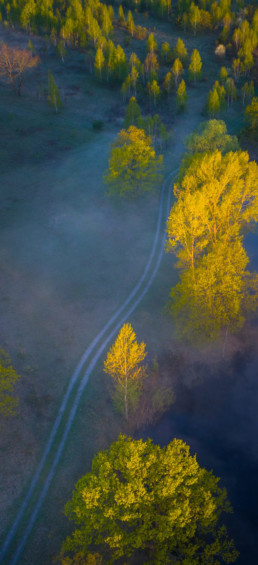
The national park is a patchwork of wild landscapes. At its heart lies a stretch of the Pripyat River’s natural floodplain, flanked by ancient, old-growth forests covering the first and second river terraces. These forests eventually give way to a vast, wet wilderness of transitional and raised bogs, which stretch all the way to the Almany Mires.
The Pripyat River’s bed and its floodplain have been preserved in their natural state, and the same is true for the extensive peat bogs. The landscape is dotted with surprises, including small systems of sand dunes formed by wind, and over 100 lakes – most of them serene oxbows left behind by the river’s meandering path.
This incredible variety creates a haven for biodiversity. The river valley is rich in forest, wetland, and meadow habitats. The park’s most treasured natural wonders include old-growth deciduous forests, including those that are regularly flooded, swampy black alder forests, complexes of open and wooded fens, transitional and raised bogs. Because of this diversity, the park plays a particularly vital role in protecting a number of Belarus’s rare and precious natural habitats.
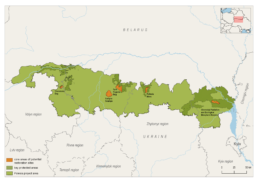
Country: Belarus
Area: 87,134.66 ha
National protection status: National Park
International protection status: Ramsar site (2197) – Pripyatsky National Park (88,553 ha); Emerald Network* (BY0000007) – Pripyatskiy (90,789.2 ha); IBA (BY023) – Prypiackija baloty (90,630 ha).
* After denunciation of accession to the Bern Convention on the Conservation of European Wildlife and Natural Habitats, de jure there are no Emerald Network sites in Belarus.
>700 species
of fauna are recorded in the area
40 key habitats
listed in Resolution #4 of the Standing Committee to the Bern Convention are found here
1073 species
of vascular plants occur in the area
Land cover
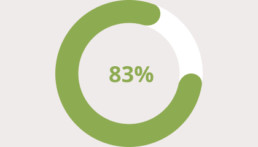
Forests, including forested peatlands
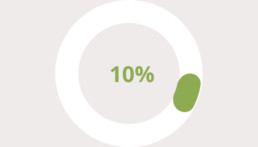
Open peatlands

Meadows

Waterbodies

Others
Biodiversity and natural values

Habitats
Among the diversity of aquatic, woodland and wetland habitats that occur in the national park, 40 ones are listed in the Resolution No. 4 of the Standing Committee to the Bern Convention as those requiring special protection measures, including the following:
Aquatic Habitats
- Free-Floating Plant Rafts and Mats (3150): Floating Frogbit Rafts, Floating Water Soldier Rafts, Floating Bladderwort Colonies, Floating Salvinia natansMats, General Free-floating Vegetation of Eutrophic Waters;
- Rooted Underwater Vegetation (3150): Rooted Submerged Vegetation of Eutrophic Waters, Rooted Submerged Aquatic Vegetation of Eutrophic Waterbodies;
- Other Water Body Types: Permanently Dystrophic Lakes, Ponds and Pools (3160) – Acidic, brown-water bodies, Species-poor Beds of Low-growing Water-fringed Vegetation (3130) – Sparse plant beds at the water’s edge.
Wetland Habitats
- Raised Bog Complexes (7110-7120),
- Transitional Mires and Quaking Bogs (7140),
- Rich Fens (7230) – including eutrophic tall herb fens and calcareous flushes and soaks,
- Beds of Large Sedges (7210) – normally without standing water;
Grassland Habitats
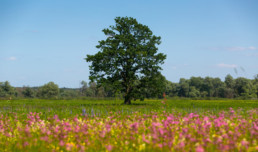
- Moist or Wet Eutrophic and Mesotrophic Grasslands (6440),
- Moist or Wet Tall Herb and Fern Fringes and Meadows (6430);
Woodland Habitats
- Riverine Forests (adapted to flooding): Riverine Scrub, Riverine Willow Woodland (91E0), Riverine Ash-Alder Woodland (91E0), Mixed Oak, Elm and Ash Woods on Large Rivers (91F0);
- Upland & Bog Forests: Oak, Ash and Hornbeam Woods (9170) – on nutrient-rich soils, Sphagnum Birch Woods (91D0) – forests in bogs, Boreal and Nemoral Coniferous Woods (91D0), Enclave Spruce Woods;
- Culturally Influenced Woodlands: Pasture Woods (9070/6530) – a tree layer above pasture (wooded meadows).

Flora
As many as 1073 species of vascular plants grow in the Pripyat National Park, 47 of them are included into the Red Book of Belarus, e.g. the Marsh Clubmoss (Lycopodiella inundata), the Floating Watermoss (Salvinia natans), the Small Pasqueflower (Pulsatilla pratensis), the Garland-flower (Daphne cneorum), the Stool iris (Iris aphylla ssp. Hungarica), the Yellow Azalea (Rhododéndron lúteum), and others.

Fauna
The fauna includes 362 species of invertebrates, 45 species of mammals, 255 species of birds, 7 species of reptiles, 11 species of amphibians and 43 fishes.
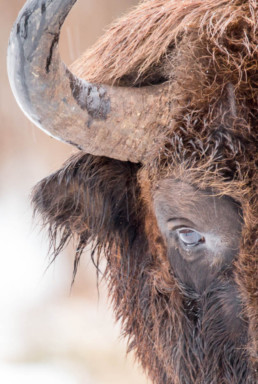
A number of protected and rare mammals can be found on the site: the European Bison (Bison bonasus), the Lynx (Lynx lynx), the Badger (Meles meles), the Edible Dormouse (Myoxusglis) and the Hazel Dormouse (Muscardinus avellanarius), the Lesser Noctule (Nyctalus leisleri) and others.
The herpetological complex includes such rare species as the Crested Newt (Triturus cristatus), the European Pond Turtle (Emys orbicularis), and the Copperhead (Coronella austriaca).
The territory is of exceptional importance for a number of fish species: the Asp (Aspius aspius), the Golden Loach (Sabanejewia aurata), the White-finned Gudgeon (Romanogobio albipinnatus), the Spined lLoach (Cobitis taenia), the European Bullhead (Cottus gobio), the Ukrainian Brook Lamprey (Eudontomyzon mariae), the Balon’s Ruffe (Gymnocephalus baloni) etc.
The territory of the National Park is rich in rare insect species, such as the Great Capricorn bBeetle (Cerambyx cerdo), False Ringlet (Coenonympha oedippus), Danube Clouded Yellow (Colias myrmidone), the Stag Beetle (Lucanus cervus), the Large Copper (Lycaenadispar), the Scarce Large Blue (Maculinea teleius), the Dusky Large Blue (Maculinea nausithous) and others.

Birds
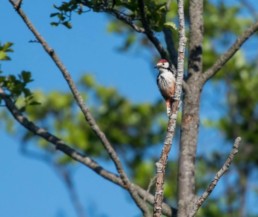
The site is a critical breeding area for such a globally endangered bird species as the Greater Spotted eEagle (Аquila clanga) (more than 3% of the national population), the Crane (Grus grus), the Great Grey Owl (Strix nebulosa), the White-tailed Eagle (Haliaeetus albicilla), the Black Stork (Ciconia nigra), the Short-toed Eagle (Circaetus gallicus) (about 1-2% of the national population). The Bittern (Botaurus stellaris), the Black Kite (Milvus milvus), the Golden Plover (Pluvialis apricaria), the Capercaillie (Tetrao urogallus), the Little Tern (Sterna albifrons), the Terek Sandpiper (Xenus cinereus), the White-backed Woodpecker (Dendrocopos leucotos), the Three-toed Woodpecker (Picoides tridactylus) are also registered in the area.
The most important impacts and threats

Meadows overgrowing with shrubs

Sanitation felling, dead wood removal

Old drainage systems

Transformation of floodplains into arable lands
The forest habitats and species suffer from sanitation felling, deadwood withdrawal, and forest plantation. The meadow ecosystems are threatened by overgrowing with shrubs due to abandoning of hay-making and grazing, transformation of floodplains into arable land, cereals cultivation, spring and autumn burnings. The wetland ecosystems may degrade because of the old network of drainage canals within the national park, dredging, and damming; polder systems within and outside the national park. Additionally, spring hunting is detrimental for the waterfowl and waders.
Protection and conservation needs
In the Prypiacki National Park, drainage, construction, clearcut logging and some other land use is restricted. For some natural complexes and species’ habitats there were created special protected areas. 30,926 ha (35.1%) are within the strict protection zones, where any economic activities are prohibited.
Desirable measures that could enhance the conservation of the area are:
- Expansion of the strict protection zones up to 50% of the area, at least, including the most valuable broad-leaved forest communities;
- Compiling a detailed inventory of rare and protected species outside the strict protection zones;
- Creating protected areas with restrictions on economic activity;
- Updating the management plan;
- Developing the system of monitoring of the nature conservation values.
Our activities in the area
The management plan for the national park has been developed and approved. Typical and rare habitats in the national park area have been identified to improve their conservation. Equipment for conservation activities has been purchased and handed over to the national park staff.



The project “Polesia – Wilderness Without Borders” is part of the Endangered Landscapes & Seascapes Programme and is funded by Arcadia. The project is coordinated by Frankfurt Zoological Society (FZS).