

Key project areas
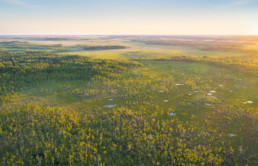
Almany MiresNature Reserve
This is a vast area of swampland located between three right tributaries of the Pripyat River – the Garyn, the Scviga and the Lva. It is Europe’s largest cross-border wetland of its kind, and it has remained in a natural state, with very little interference from people.
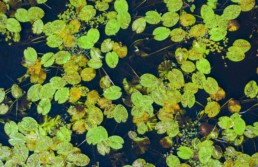
ProstyrNature Reserve
The area is located between the Pripyat and the Prostyr rivers, as well as the floodplain of the Gnilaja Pripyat River and part of the floodplain of the Styr River stretching from the Ukrainian border to the Gnilaja Pripyat Firth. The area boasts a diversity of meadow and wetland habitats being an important stopover and breeding ground for a number of protected waterbird species.
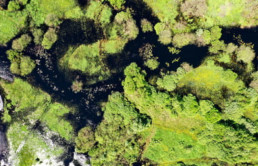
Lva FloodplainNature Reserve
The area is situated within the floodplain of the Lva River. This landscape is characterized primarily by waterlogged deciduous forests, interspersed with sedge meadows, mixed herbaceous and cereal meadows, and swamp habitats along the river course. The site retains a broad spectrum of wetland habitats critical for biodiversity conservation.
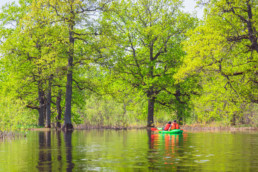
PrypiackiNational Park
The national park is a patchwork of wild landscapes. At its heart lies a stretch of the Prypiat River’s natural floodplain, rich in forest, wetland, and meadow habitats. Because of this diversity, the park plays a particularly vital role in protecting a number of Belarus’s rare and precious natural habitats.
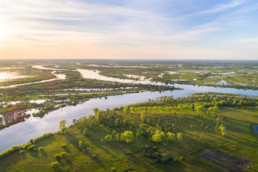
Turaw MeadowNature Reserve
The IBA comprises a floodplain meadow with two oxbow lakes on the right bank of the Pripyat River, next to the town of Turaw. The Turaw Meadow is exceptionally important for wetland birds, especially during the spring migration, when more than 200,000 waders may accumulate here at the same time.
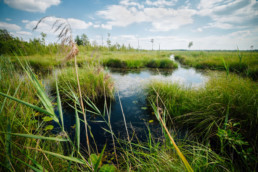
Stary ZhadzienNature Reserve
This area is a vast and tapestry of forests and wetlands. At its heart lie the Stary Zhadzien and Vialikaje mires, two great peatlands separated by ancient sand dunes. Situated between the Almany Mires and the Pripyat National Park, this region collectively forms the largest complex of mires and forests in all of Europe.
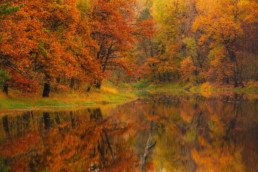
StarobinskyNature Reserve
The Starobinsky Local Nature Reserve was designated with the participation of our project specialists. This area is located in the north part of the Pripyat Polesia. Encompassing a number of valuable habitats, the nature reserve supports a great biodiversity with a high concentration of protected species of flora and fauna.
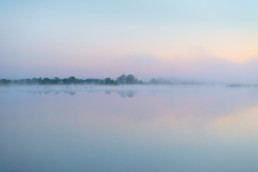
Mid-PrypiacNature Reserve
This is a fragment of the Pripyat River valley in its middle course. It is one of Europe’s most expansive and untouched floodplains, a rare natural sanctuary. The numerous and inaccessible overgrown oxbow lakes and floodplain lakes, which occupy about 3% of the area, support an incredible variety of plant and animal life, making this landscape uniquely diverse and alive.
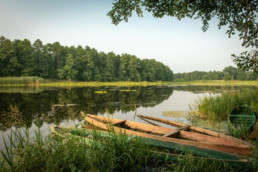
NobelskyiNational Park
This area represents a typical Polesian landscape, featuring waterlogged river floodplains, marshes, forests, and large polder systems. Inside the national park, the Stokhid and Pripyat rivers run wild and untouched. Their channels are entirely natural, meandering across the land, splitting into numerous branches and flow paths, and their riverbanks seamlessly blend into the surrounding marshes.
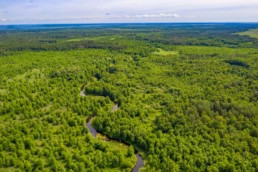
Prypiat-StokhidNational Park
The national park protects a magnificent, more than 50-kilometer-long section of the Pripyat River valley preserved in its natural state. This is a landscape of waterways, characterized by numerous channels, quiet oxbow lakes, and vast floodplain marshes and meadows. It also encompasses the pristine, naturally preserved mouth where the Stokhid River flows into the Pripyat.
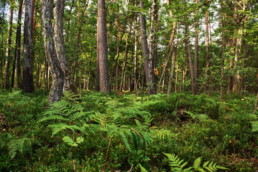
CheremskyiStrict Nature Reserve
The Cheremskyi Strict Nature Reserve is situated between the Pripyat, Styr, and Stokhid rivers, forming a rich wetland complex that includes mesotrophic mires, swamp forests, and two glacial karst lakes. Forests dominate the landscape, covering approximately 64% of the area. At the heart of the reserve lies one of Ukraine’s largest and best-preserved transitional mires: the Cheremskyi sedge-sphagnum mire.
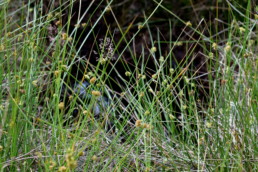
RivnenskyiStrict Nature Reserve
The area consists of five Ramsar sites: Perebrody Peatlands, Syra Pohonia Bog, Somyne Swamps, Bile Lake and Koza Berezyna Mire. Four of these represent fragments of one of Europe’s largest transboundary forest and mire complexes, the Almany/Olmany Mires. The fifth, westernmost site is a fragment of a large forest and mire complex located in the interfluve of the Stokhid and the Horyn rivers.
Pushcha RadzivilaNational Park
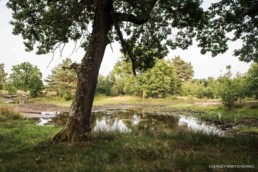
This area is part of one of Europe’s largest transboundary forest and peat bog complexes – the Almany/Olmany Mires. It also includes a stretch of the Stvyha River valley, about 20 kilometers long. This section of the river is completely natural. Its marshy riverbed forms numerous oxbow lakes and side channels.
PoliskyiStrict Nature Reserve
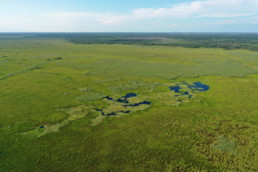
This area is a fragment of the forest and wetland complex nestled between the Ubort and Bolitnytsia rivers. The landscape is mostly flat, but it’s dotted with sand hills, low ridges, and swampy depressions. You can also find striking granite rock formations here—some are wide, giant boulders, while others appear as groups of rocks covered in lichen or damp, cavernous crevices.
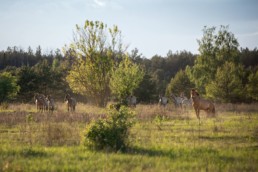
The reserve is an evacuation zone following the Chornobyl nuclear power plant accident (1986), with high levels of radioactive contamination. The area has a variety of landscapes and ecosystems typical for Polesia. It includes forests and peat bogs, the Pripyat River valley and many medium and small rivers. Abandoned settlements and former agricultural areas occupy a significant part of the reserve.
DrevlianskyiStrict Nature Reserve
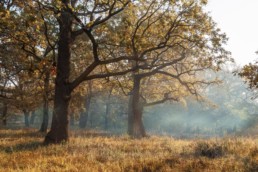
The nature reserve protects a forest and mire complex located on the southern edge of the Polesia lowland, between the Uzh-Zherev and the Uzh-Zvizdal rivers. This landscape is a patchwork of plains, sandy stretches, and swamps. Here we find a unique mosaic of northern mires and southern oak forests, shaped by postglacial landscapes.