
Poliskyi Strict Nature Reserve
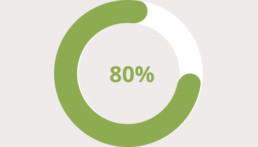
This area is a fragment of the forest and wetland complex nestled between the Ubort and Bolitnytsia rivers. The landscape is mostly flat, but it’s dotted with sand hills, low ridges, and swampy depressions. You can also find striking granite rock formations here—some are wide, giant boulders, while others appear as groups of rocks covered in lichen or damp, cavernous crevices. Forest vegetation absolutely predominates covering more than 80% of the area. Pine forests of various types (like lichen, blueberry, and sphagnum) are most common, with smaller areas of birch, alder, oak, and hornbeam-oak forests.
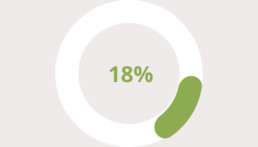
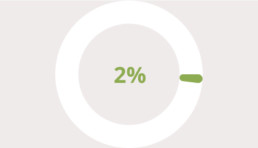
Scattered among these woods are extensive marsh complexes: mesotrophic bogs, dominated by sedges, cover about 1,600 hectares; oligotrophic bogs span over 400 hectares. In total, open mires (including a re-wetted, abandoned polder in the center of the reserve) make up about 18% of the area. The remaining 2% is a mix of meadows and water reservoirs. Dry grasslands appear in small fragments on the edges and in clearings, with scrubs and heathlands scattered sporadically throughout.
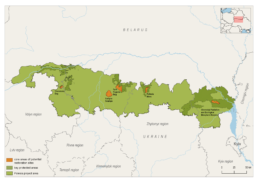
Country: Ukraine
Area: 20,104.0 ha
National protection status: Strict Nature Reserve
International protection status: Ramsar site (1403) - Polissia Mires (2,145 ha); IBA (UA009) - Polis'kyi Nature Reserve (20,104 ha); Emerald Network* (UA0000001) – Poliskyi (36,465 ha).
*The following description relates to Poliskyi Emerald Network site.
20 key habitats
listed in the Resolution #4
of the Standing Committee
to the Bern Convention are found here
1770 species
of fauna have been recorded in the area
>60 species
included into the Resolution #6 of the Standing Committee to the Bern Convention occur here
Land cover
Forests
Open mires
Meadows and waterbodies
Biodiversity and natural values

Habitats
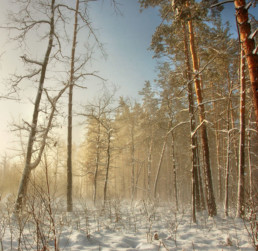
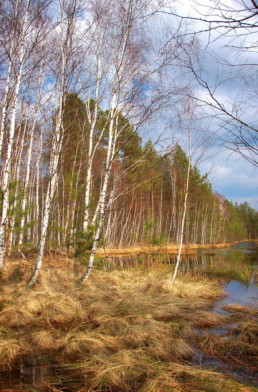
The area is peculiar for diversity and richness of wetland and forest biotopes. About 20 natural habitats requiring specific protection under the Resolution No 4 the Standing Committee to the Bern Convention have been identified here, including the following:
Wetland Habitats
- Raised bog complexes (7110),
- Transition mires and quaking bogs (7140),
- Beds of large sedges (normally without free-standing water);
Woodland Habitats
- Sphagnum birch woods (91D0),
- Nemoral bog conifer woodland (91D0),
- Acidophilous oak-dominated woodland (9190) – on poorer, acidic soils,
- Oak-ash-hornbeam woodland (9170) – on richer, neutral soils.

Biodiversity
604 species of vascular plants, 139 mosses and 140 lichens occur in the territory of the reserve. Its flora includes boreal (taiga) and Nemoral (forest-steppe) species.
The fauna of the Strict Nature Reserve comprises 1770 species of animals, including 1502 species of invertebrates and 279 vertebrates’ species (45 mammals, 195 birds, 12 amphibians, 7 reptiles, and 19 fish). The territory is of great importance for a number of flora and fauna species. Over 60 of them are listed in the Resolution No 6 of the Standing Committee to the Bern Convention. 41 plant species of the park are listed in The Red Data Book of Ukraine. Among them are the Dicranum Moss (Dicranum viride), the Eastern Pasqueflower (Pulsatilla patens), the Sand Jurinea (Jurinea cyanoides), the Lapland Willow (Salix lapponum), the Myrtle-leaved Willow (Salix myrtilloides), the Buxbaum’s Sedge (Carex buxbaumii), and others.
The following mammal species are common inhabitants locally: the Lynx (Lynx lynx), the Otter (Lutra lutra), the Badger (Meles meles), the Grey Wolf (Canis lupus).
A range of rare insects have been identified here: the Jersey Tiger (Callimorpha quadripunctaria), the False Ringlet (Coenonympha oedippus), the Danube Clouded Yellow (Colias myrmidone), the Marsh Fritillary (Euphydryas aurinia), the Large Copper (Lycaena dispar), the Dusky Large Blue (Maculinea nausithous), the Scarce Large Blue (Maculinea teleius), etc.
67 animal species occurring in this territory are listed in the Red Data Book of Ukraine.

Birds
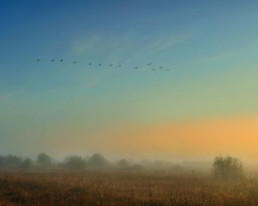
The area is of greatest importance for conservation of such bird species as the Tengmalm’s Owl (Aegolius funereus), the Hazel Grouse (Bonasa bonasia), the Nightjar (Caprimulgus europaeus), the Black Stork (Ciconia nigra), the Short-toed Eagle (Circaetus gallicus), the European Roller (Coracias garrulous),the White-backed Woodpecker (Dendrocopos leucotos), the Great Snipe (Gallinago media), the Pygmy Owl (Glaucidium passerinum), the Crane (Grus grus), the Gray-headed Woodpecker (Picus canus),the Great Grey Owl (Strix nebulosa), the Black Grouse (Tetrao tetrix tetrix), the Capercaillie (Tetrao urogallus).
The most important impacts and threats

Logging and dead wood removal

Wildfires

Old drainage systems
Protection and conservation needs
55% of the area belongs to the Poliskyi Strict Nature Reserve, partly overlapping with other national protected areas. About 60% of the area is legally protected. Economic activities are legally prohibited in most of the area. However, monitoring shows their presence, including large-scale logging. A management plan has been developed for the Poliskyi Strict Nature Reserve. In addition, a buffer zone has been established around the reserve to mitigate adverse impacts, with some economic activities restricted.
The following measures are recommended for improving the conservation efficiency:
- Compiling a detailed inventory of the habitat and species of conservation value;
- Extension of the boundaries of existing protected areas;
- Systematic monitoring of conservation values;
- Development of a management or conservation plan for the area.
Our activities in the area
Biodiversity monitoring
The Frankfurt Zoological Society supports biodiversity monitoring in the Poliskyi Strict Nature Reserve as part of its wider engagement in the Polissia region. To strengthen the reserve’s capacity to document and protect its wildlife, FZS has provided a range of modern monitoring equipment, including binoculars, scopes, GPS devices, mobile phones, and other essential field tools.
The Spatial Monitoring and Reporting Tool (SMART) has been introduced to improve the systematic collection and management of biodiversity and patrol data. Reserve staff receive support and training to effectively use the system in their daily work. In addition, camera traps have been installed to monitor large mammals and better understand species distribution and population trends. Acoustic monitoring has also been carried out, focusing on birds, small mammals, and insects, providing valuable insights into the reserve’s biodiversity using non-invasive methods.
Operating and emergency support
To ensure the stable day-to-day functioning of the Poliskyi Strict Nature Reserve, FZS provides financial assistance for essential operational costs. This includes support for fuel, vehicle maintenance, and repairs, helping staff to carry out fieldwork and patrols effectively.
In response to increasing risks, particularly related to wildfires, FZS has also supplied the reserve with critical emergency equipment, including fire-fighting gear. This support enhances the reserve’s preparedness and ability to respond quickly to emergencies, contributing to the protection of both ecosystems and infrastructure.
Strengthening communication and outreach
FZS is supporting the development of a new official website for the Poliskyi Strict Nature Reserve to improve public access to information and increase visibility of the reserve’s conservation work. As part of this process, reserve staff are being trained to develop, manage, and regularly update the website independently.
Overcoming the challenges caused by war
Since the beginning of the full-scale invasion, the Frankfurt Zoological Society has mobilised targeted support for protected areas in the Polissia region that have been directly affected by the war or involved in supporting internally displaced people (IDPs). The Poliskyi Strict Nature Reserve has received financial assistance during particularly critical periods to help maintain its core functions under difficult circumstances. This support has covered essential operational needs, including fuel, vehicle spare parts and maintenance, building upkeep, rent, telecommunications, and office supplies. Such assistance has been vital in ensuring the continued operation of the reserve and the safeguarding of its ecosystems despite the ongoing challenges.


The project “Polesia – Wilderness Without Borders” is part of the Endangered Landscapes & Seascapes Programme and is funded by Arcadia. The project is coordinated by Frankfurt Zoological Society (FZS).