
Polesie State Radioecological Reserve
Nestled inside the post-Chornobyl exclusion zone in Belarus, this vast nature reserve tells a story of profound change. After the 1986 nuclear disaster, radiation swept through the land, forcing the evacuation of every village and leaving the area in silence. For decades, humans have stayed away, allowing nature to reclaim the land and evolve organically.
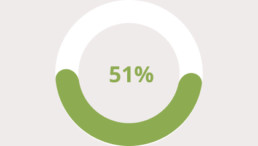
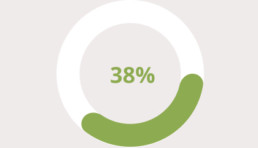
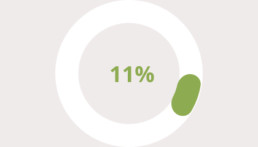
Now, nature is slowly healing and taking back what was once its own. Without people, the land is being rewilded. Forests are spreading, and old wetlands, once drained for farms, are filling with water again. About half of the reserve is now covered in young woodlands. Roughly 38% is former farmland, gradually softening back into marsh and meadow. The rest unfolds as the lush, watery floodplain of the Pripyat River, where moist grasslands sway in the breeze. Life is quietly and resiliently filling the quiet spaces once again.
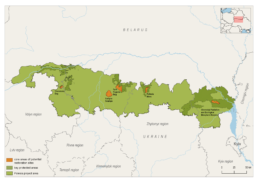
Country: Belarus
Area: 218,318.2 ha
National protection status: Nature Reserve
International protection status: Emerald Network - Lower Prypiats BY0000060; IBA (BY035) – Polesie Reserve (218,318.0 ha)
1200 species
of vascular plants recorded in the area
40 key habitats
included
in the Resolution #4 of the Standing Committee to the Bern Convention
>10%
of the national population of the European bison lives in the area
Land cover
Forests
Former agricultural lands
The Pripyat river floodplain
Biodiversity and natural values

Habitats
The area boasts a rich diversity of forest and wetland habitats, about 40 of which are listed in Resolution No. 4 of the Standing Committee of the Bern Convention. Below are some of the protected habitats found in the nature reserve.
Freshwater Aquatic Habitats
- Lakes and Ponds: Submerged carpets of stoneworts in mesotrophic waterbodies (3140),
- Floating & Submerged Vegetation (3150): Floating frogbit rafts, Floating water-soldier rafts, Floating bladderwort colonies, Floating Salvinia natansmats, Free-floating vegetation of eutrophic waterbodies, Water crowfoot communities, Water violet beds;
- Springs & Spring Brooks: Fennoscandian mineral-rich springs and spring fens (7160), Mesotrophic and Eutrophic vegetation of spring brooks (3260);
- Rivers & Streams (3260): Mesotrophic and Eutrophic vegetation of fast-flowing streams, Mesotrophic and Eutrophic vegetation of slow-flowing rivers;
- Sparsely Vegetated Habitats: Species-poor beds of low-growing amphibious vegetation (3130), Euro-Siberian dwarf annual amphibious swards (3130), Sparsely vegetated river gravel banks;
Wetlands habitats
- Transition mires and quaking bogs (7140),
- Rich fens, including eutrophic tall-herb fens and calcareous flushes (7230),
- Beds of large sedges (without free-standing water),
- Moist or wet eutrophic and mesotrophic grassland (6440),
- Moist or wet tall-herb and fern fringes and meadows (6430);
Woodland habitats
- Riparian (Riverside) Woodlands (91E0 & 91F0): Riverine scrub, Riverine willow woodland, Riverine ash-alder woodland, Mixed oak-elm-ash woodland of great rivers (91F0);
- Upland Deciduous Woodlands: Oak-ash-hornbeam woodland on eutrophic and mesotrophic soils (9170).

Biodiversity
Polesie State Radioecological Reserve is home to one of the largest populations of the European Bison (Bison bonasus) (about 100 animals, or 10% of the national population), major populations of the Eurasian Lynx (Lynx lynx) (about 8% of the national population), the Grey Wolf (Canis lupus), the Common Otter (Lutra lutra), the Badger (Meles meles) (about 7% of the national population) and the European Beaver (Castor fiber).
The nature reserve is a breeding place for more than 10% of the national population of the Eurasian Bittern (Botaurus stellaris), more than 2% of the national population of the Great White Egret (Casmerodius albus), the Little Bittern (Ixobrychus minutus), the Black Stork (Ciconia nigra), the Terek Sandpiper (Xenus cinereus), more than 3% of the national population of the Little Tern (Sterna albifrons), the Collared Flycatcher (Ficedula albicollis), about 5% of the national population of the little crake (Porzana parva), the Corn Crake (Crex crex), the Common Crane (Grus grus).
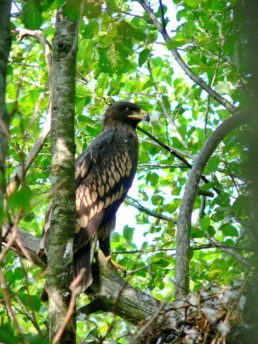
Such globally endangered species as the Greater Spotted Eagle (Aquila clanga), the Great Snipe (Gallinago media) also breed there; a major population group of the European Pond Turtle (Emys orbicularis) is concentrated in the reserve.
The flora comprises more than 1,200 species of higher vascular plants.
The most important impacts and threats
Radioactive contamination

Construction of roads and border fences

Overgrowing with scrubs
Wildfires
Protection measures and and conservation needs
The entire territory has the status of a state radiation and ecological reserve, including 148,964.0 hectares of the key zone, where all kinds of economic activities are restricted. Additionally, the access to the site is very limited (a special permission is necessary). Protected areas have been created for some biotopes and rare species’ habitats.
The conservation needs include the elaboration of a detailed inventory of the conservation values outside the key zone, development of the monitoring system of the conservation values, development of a management or conservation plan.